Houses elevated for flood protection in the Netherlands
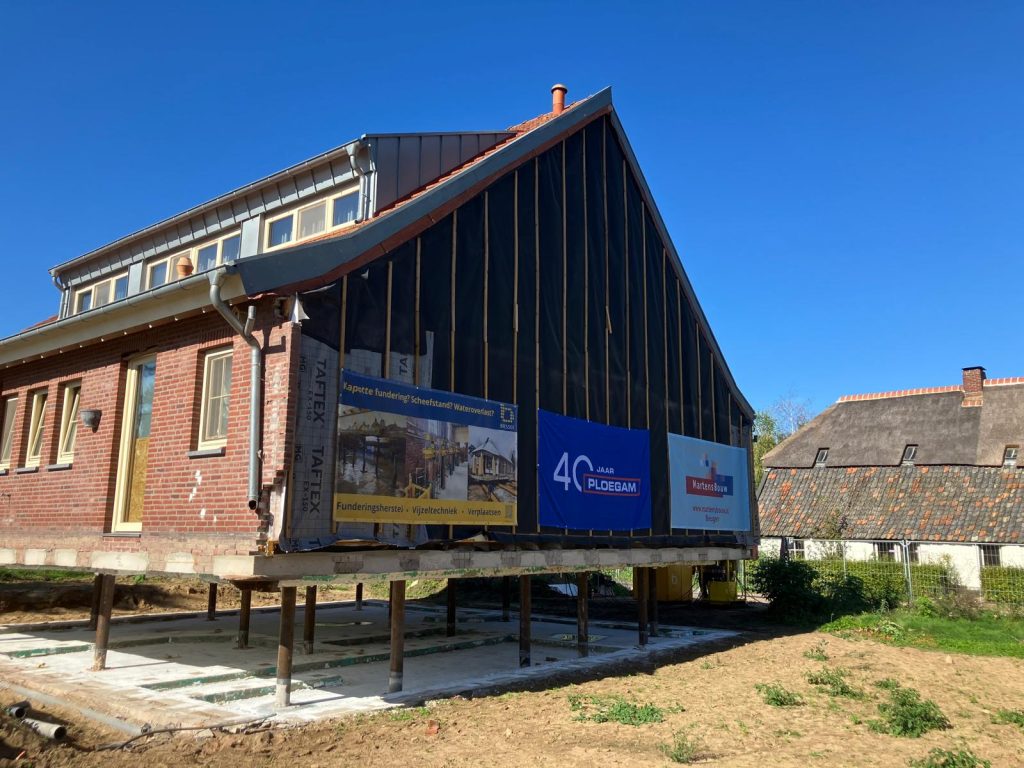
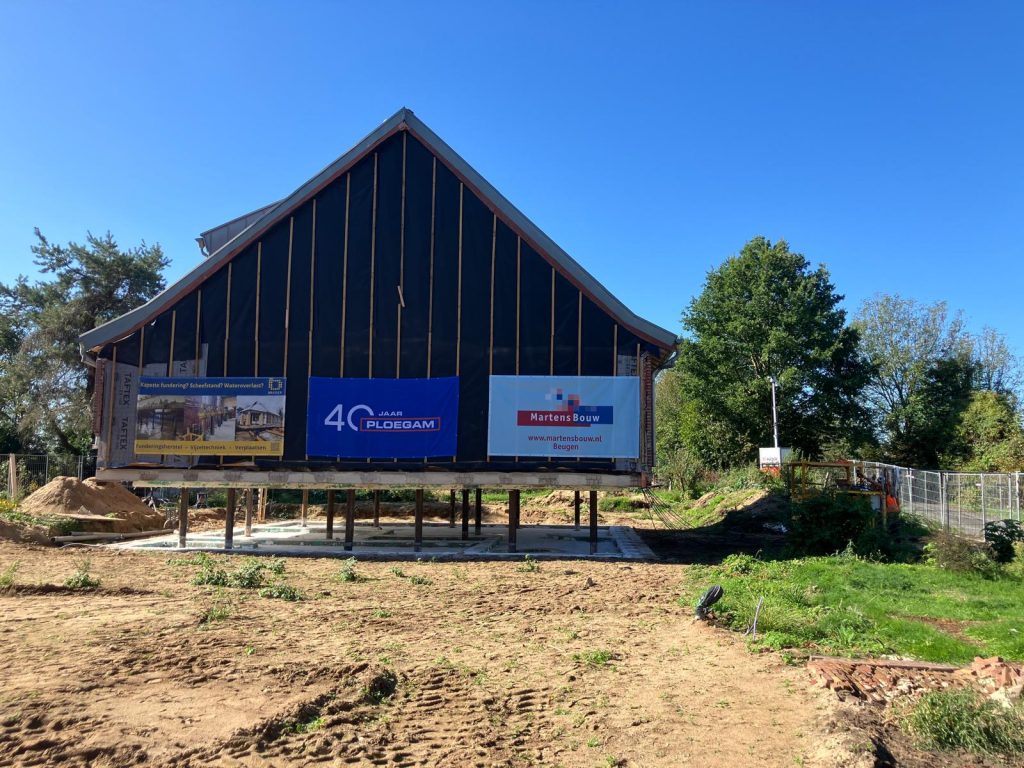
As part of the Groene Rivier Well area development project in the Netherlands, more space is being created for the River Meuse (Maas) to safely discharge high water levels. For three properties in Well, elevating the homes proved to be the most effective solution for maintaining flood safety while preserving the existing buildings and their surroundings.
Commissioned by Waterschap Limburg (Limburg Water Authority), Bresser is responsible for the technical preparation and structural lifting of the homes. By carefully raising the buildings to a higher elevation, residents can continue living in their familiar environment with greater protection against future flooding.
Tailored engineering and approach
Elevating an existing home requires specialist engineering and a tailored approach. Every property has its own structural design, foundation system and history. For this reason, each project begins with a comprehensive assessment of the building’s structural condition, load-bearing elements and foundation.
Based on these investigations, a bespoke engineering and lifting plan is developed. This determines how the property must be structurally prepared, which temporary works are required and how loads can be safely transferred throughout the lifting operation.
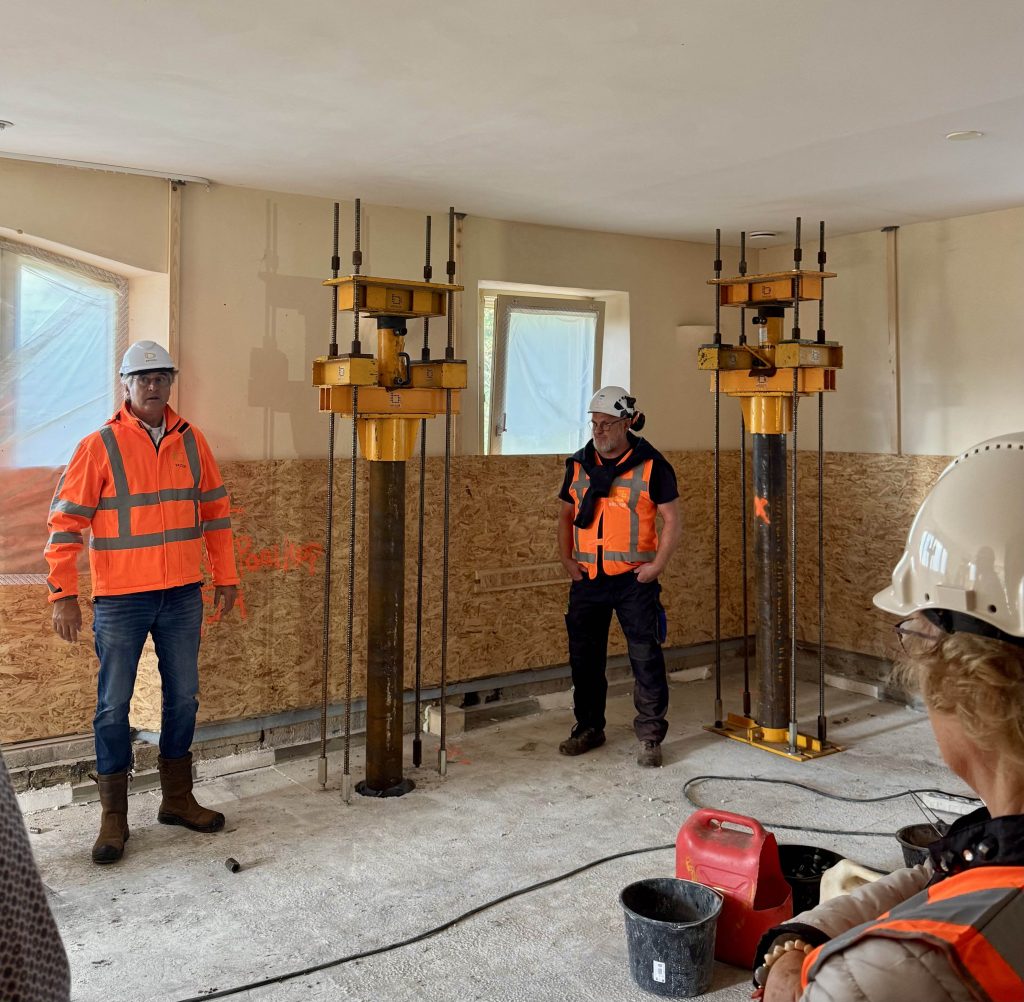
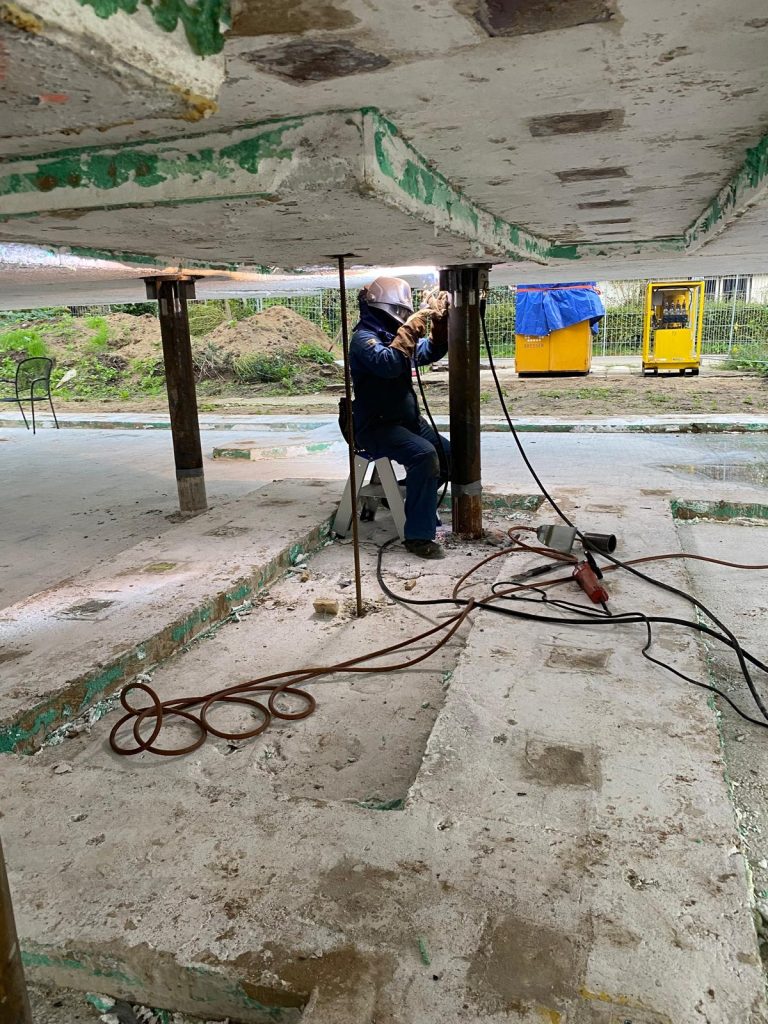
Before a house can be elevated, the existing ground floor is first removed. New foundation piles are then installed, followed by the construction of a reinforced structural floor that is connected to the building’s load-bearing walls. This creates a single structural system, enabling the house and floor to act as one integrated unit during the lifting process.
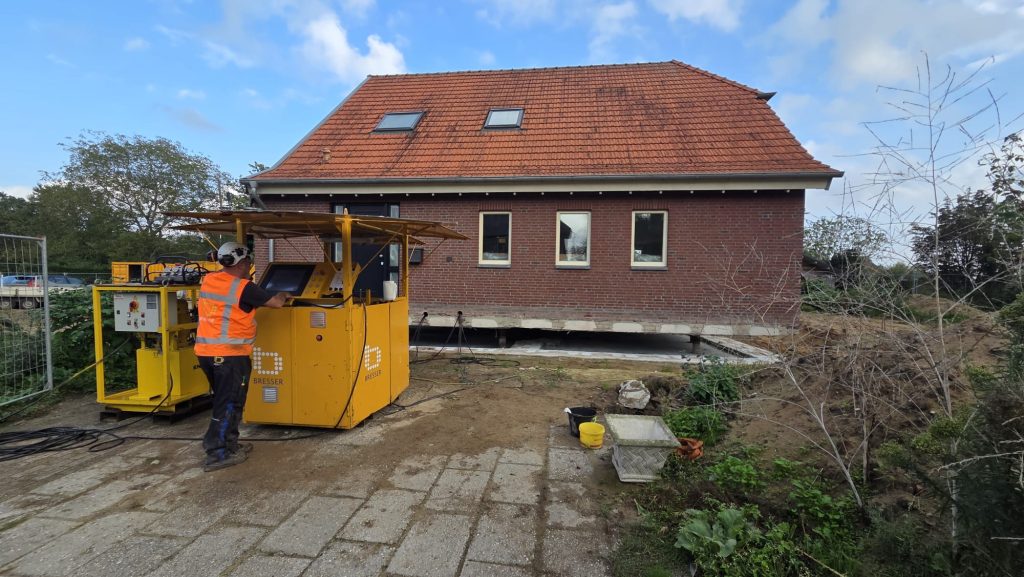
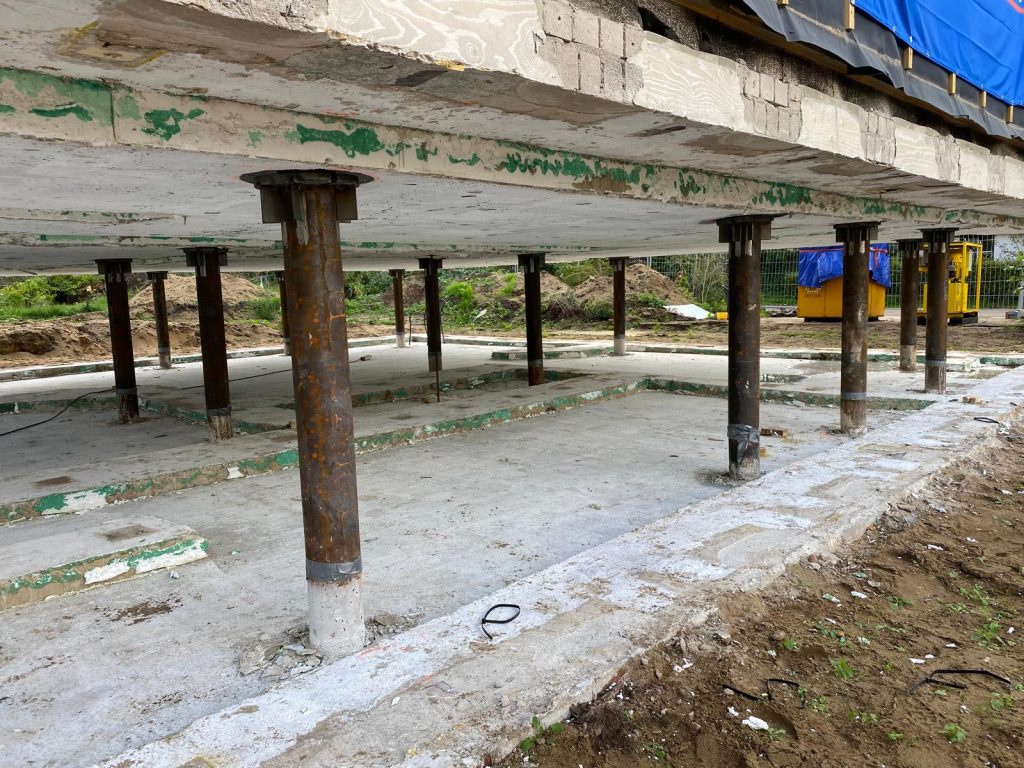
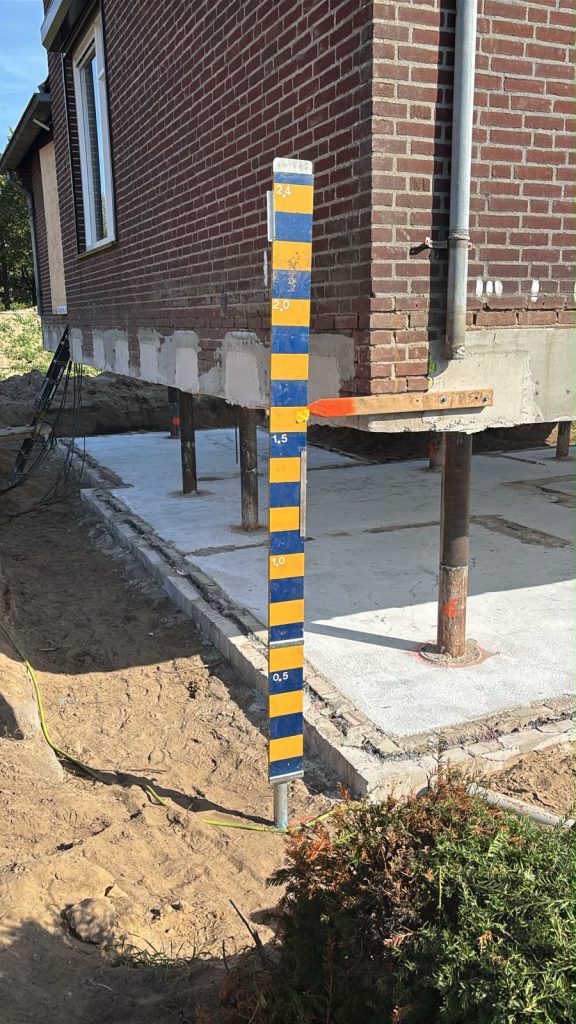
Hydraulic jacks are positioned through openings in the structural floor and, working in a synchronised system, carefully raise the building in controlled increments until the required elevation has been reached.
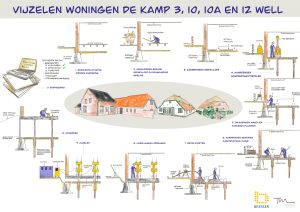
Tekening: Stephanie Bekker
Homes elevated by up to two metres
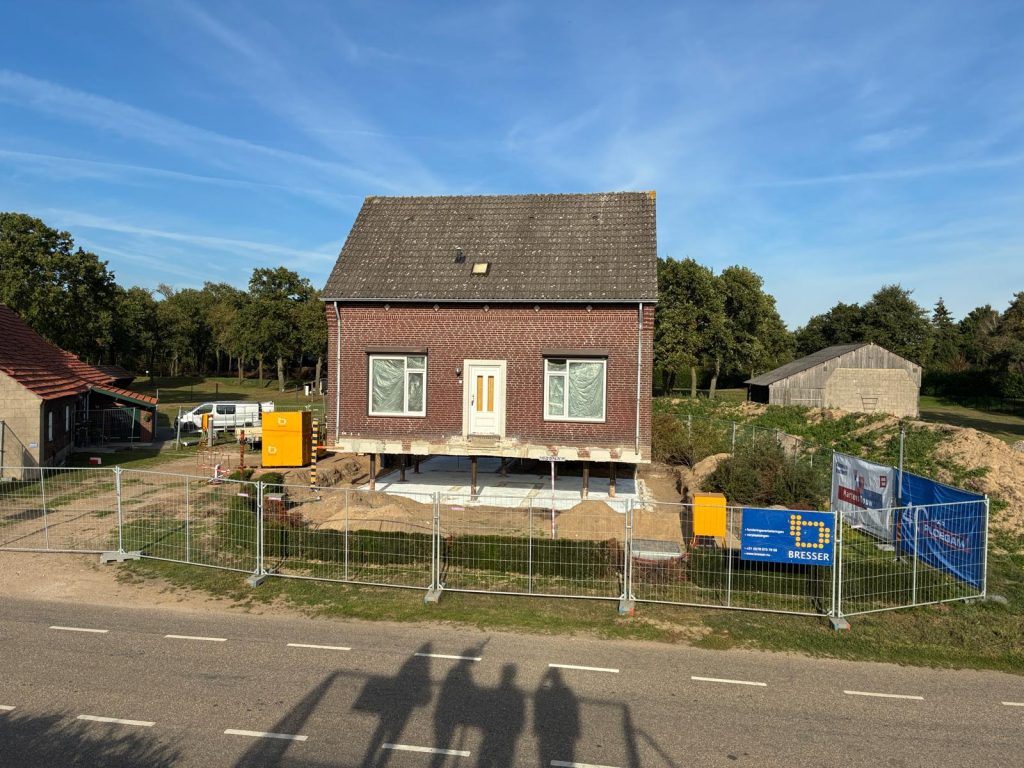
The project is being delivered in phases, with two of the three homes already successfully elevated. The property at De Kamp 12 was the first to be lifted.
Timelapse: PJP filmstudio
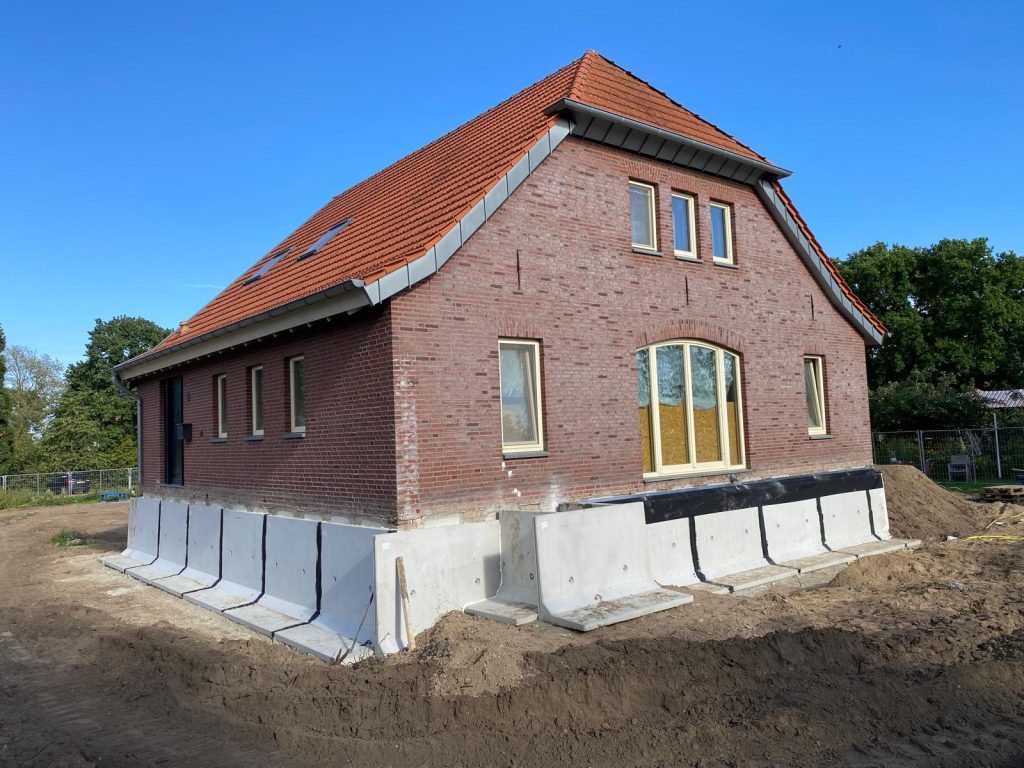
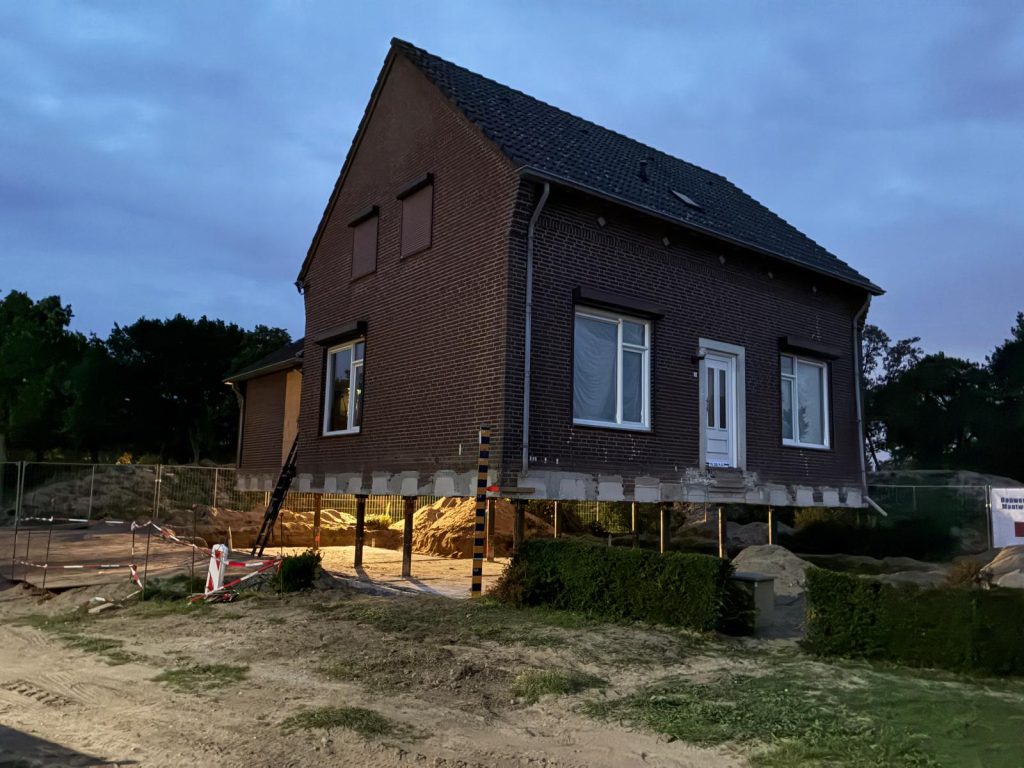
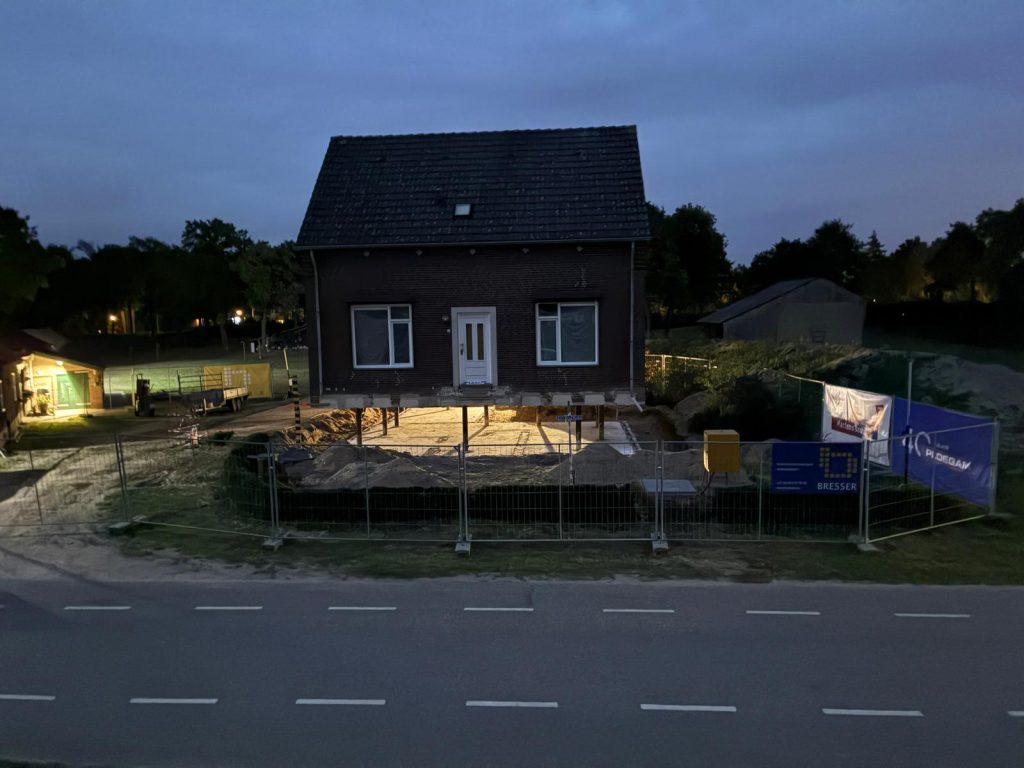
In early October, Bresser completed the elevation of the second home at De Kamp 3, raising the building by more than 1.5 metres using a synchronised hydraulic jacking system. Once the required elevation had been achieved, retaining walls were installed and the surrounding ground level was raised accordingly.
The third property, a municipal heritage farmhouse at De Kamp 10, is scheduled to be elevated by 1.94 metres in early 2027.
Precision and safety
Structural lifting requires precision at every stage. During the operation, movements, loads and settlements are continuously monitored to ensure the building remains stable throughout the process.
This carefully controlled methodology enables Bresser to elevate homes, heritage buildings and other structures with minimal impact on the existing construction, creating sustainable solutions for complex engineering challenges.
Collaboration
Commissioned by Waterschap Limburg, Bresser is partnering with Ploegam and Martens Bouw to deliver the Well House Lifting Project. Bresser is responsible for the engineering, technical preparation and structural lifting of the homes. Ploegam delivers the retaining walls, embankments and elevated access road, while Martens Bouw completes the finishing and refurbishment works.
Together, the project partners are creating an innovative flood protection solution that enables residents to remain in their homes while safeguarding the area against future flooding.
Future-proof living along the River Meuse
The House lifting project in Well demonstrates how innovative foundation engineering and structural lifting techniques can help address the growing challenges of climate adaptation and flood protection. By elevating existing homes rather than replacing them, residents can continue living in their familiar surroundings while benefiting from improved flood resilience.
For Bresser, the project is a showcase of our specialist expertise in foundation engineering, structural lifting and building relocation. Through innovative engineering solutions, we help protect homes, infrastructure and communities while preserving the built environment for future generations.
Media coverage
The House lifting project in Well has attracted significant media attention across the Netherlands, highlighting its innovative approach to flood protection and climate adaptation:
- Hart van Nederland – Late Editie
- EditieNL
- NOS – In Limburg geen dijkversterking maar palen onder de woning tegen het wassende water
- NU.nl – Limburgse huizen gaan op een dienblad de lucht in tegen hoogwater
- AD – Woning in Limburg wordt 1,5 meter verhoogd in timelapse
- De Limburger – Woningen in Well worden anderhalve meter opgekrikt
- L1 Nieuws – Huis zweeft boven De Kamp in Well
- Maasduinen Centraal – Unieke woning Kamp 3 opgevijzeld tegen hoogwater